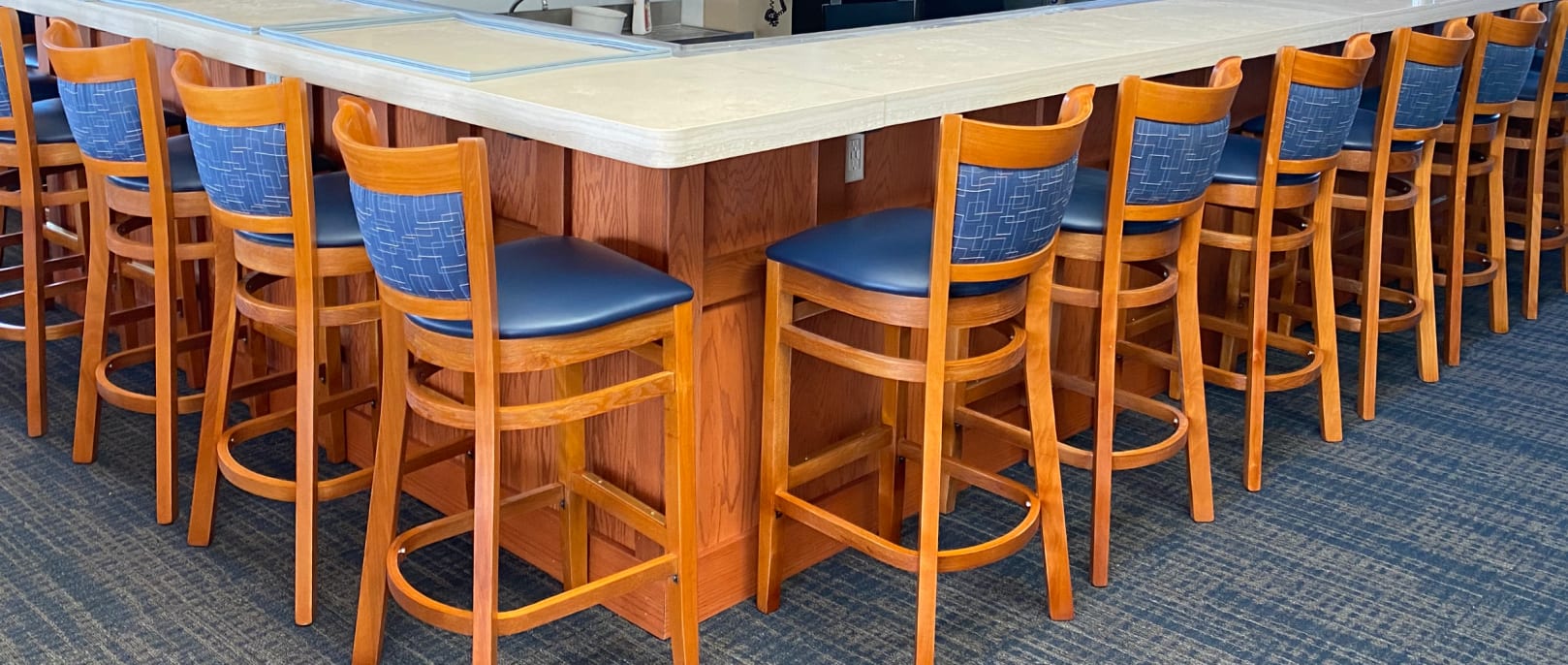

Looking for Bar Stools for Your Restaurant?
Here you’ll find precisely what you are looking for, the perfect place to fit-out your restaurant, cafe, or bar. Whether your space is understated or upmarket, our vast selection of built to last restaurant bar stools are comfortable, and sure to compliment a new design or spruce up an already furnished space. With our comprehensive range of commercial bar stools and restaurant furniture, we are confident that the significant variation in colors, materials, and designs will have you covered. Plus, on top of flexible choice, our customers also gain the benefits of speedy shipping and competitive pricing for many of our made in the USA products.
We take the stress out of designing your restaurant, bar, or cafe with our customer-friendly website and options to sort and compare the best bar stools available. With over eight creative themes and a further 15 unique design styles of quality-made bar stools you will surely find the commercial grade bar stools you are looking for. This is your one-stop home for indoor and outdoor commercial furniture. We help you bring it all together, from the vision in your mind to the floor with practical elements that help your customers to feel comfortable with your hospitality!
Why Your Venue Needs Top Quality Restaurant Bar Stools
So, you’ve decided to invest back into your business and update your venue with a range of new commercial furniture, but you don’t know where to start or what to look for? Well, luckily, you have come to the right place! The hospitality industry is built on the backbone of service. Your long-lasting success will result from consistent hard work and the combination of the quality and vibe that your customers feel when visiting. With all the traffic that commercial establishments experience, your furniture can wear down. The commercial grade quality of our restaurant bar stools will save you from worrying about your furniture's wear and tear - allowing you to focus on growing!
How to Choose the Best Restaurant Quality Bar Stools
Choosing the right commercial restaurant furniture is often overlooked, but when it comes to the best bar stools for restaurants, cafes, and bars - seating can often define your style, not to mention plays a part in defining how your customers respond. Have you ever wanted to go down to a sports bar and watch a long game of football? Now, imagine trying to do so with an impractical and uncomfortable bar stool. While you need to focus on the design and style of your business or space - don’t forget to put yourself in the position of your customers to get an idea of what might work.
Commercial Bar Stools Buying Guide
Finding the right bar stool is not as simple as it sounds - even if we help you make the process as smooth as possible! There are many questions to ask yourself when looking at new bar stools. To help you in deciding what the best bar stools might be for your space, consider these helpful hospitality buyers guide tips that we picked up over the years:
- Measure the height of your bar, counter, or the height of eating surfaces. This will let you filter out those bar stools that don’t suit your business straight away!
- Think practical when deciding on the material of your stools. Seating around a bar should be durable and robust enough to handle accidents or spillages.
- Proper back support is excellent, but don’t underestimate the power of a good footrest or bar to rest weary feet!
- Keep an eye out for purchases that include an adequate warranty, just like all of the bar stools we supply.
- Don’t overcrowd an area with too many seats or stools; personal space is always appreciated.
- Consider a bar stool with certain features like a commercially rated swivel seat.
The Best Materials for Restaurant Bar Chairs
Although designs and styles are continually evolving, one thing that stays relatively unchanged is the suitability of specific materials for use in bar stools at restaurants. This is especially so in a hospitality context where heavy use is expected. Below are the three main materials used for bar stools in restaurants:
Aluminum Bar Stools
Aluminum is not only very durable it is also the perfect choice for patio dining. Weather and UV resistant the aluminum patio bar stools are an ideal way to create a comfortable outdoors area especially since unlike stainless steel aluminum doesn’t tend to get as hot when placed in direct sunlight.
Wood Bar Stools
While being a little more expensive, wood bar stools, which can be slightly less sturdy than metal ones, are a perfect choice for up-scale restaurants and venues looking to add some warmth and comfort to their interior.
Metal Bar Stools
Ideal for fast food restaurants, diners and sport bars metal bar stools combine functionality with comfort. What they may lack in sophistication (compared to wood ones) they make up in ease of maintenance, price and sturdiness.