
Choosing The Right Commercial Table Base
On our site, you will find our comprehensive catalog of excellent-quality restaurant table bases - perfect for any fit-out within the hospitality industry. Whether you are just looking for new table designs or are improving on your initial investment, you’ll find a range of table bases featuring a variety of materials, dimensions, and designs. Our table bases are perfect for all spaces, from high-end restaurants to the jam-packed local sports bar. The bases that we stock are built to last, featuring the same attention to details and care that have become synonymous with our products.
We’ve been in the hospitality furniture and seating supply business for many years now and our furniture and competitive pricing speak for itself. Our sales team aims to be the all-rounder you’d love on your staff. They’ve got all the technical knowledge and the creative eyes to make an impact on your business. Here you’ll find our catalog of the best commercial restaurant table bases to complement any of our sought-after table tops to create an excellent look and feel in your space without and sacrificing any practicality.
Why the Design of Restaurant Table Bases Matters
Table bases are often overlooked by managers or interior designers within hospitality because, for the most part, they aren’t valued or seen as an element of the design to the majority of customers. However, the design choices for your restaurant table bases matter because these components are built to last - therefore, they will be part of your decor for years to come. There are a few components that you’ll need to consider (which we set out down below) when designing your tables, and we will fill you in on a little secret - a sturdy table base is vital.
How to Choose the Best Table Bases for Restaurants
When it comes to an understanding of how to choose the best table bases for your restaurant tables, you’ll first consider whether you are furnishing an outdoor or indoor space. This is because certain materials are more versatile than others and would be more appropriate when being exposed to the elements. While our table bases all feature exceptional quality, choosing the best fit for your restaurant or space will depend mostly on the current decor. Look for designer bases for an elegant or unique fit while chrome-based modern table bases are great for modern restaurants and bars and aluminum ones are great for outdoor settings. In contrast, cast iron table bases will suit any space and match the majority of our table top selection.
What Materials are Available for Table Bases
Our range of table bases includes all the top materials that ensure reliable quality and functionality that is perfect for the intensive wear and tear of the hospitality industry. We feature tables bases designed from aluminum, stainless steel, chrome, and the most popular material, cast iron.
Commercial Table Bases Buying Guide
We appreciate that picking a table base can be daunting; its hard to match a base with your decor without seeing the complete picture. Our restaurant furniture experts deal with these dilemmas daily, which is why we collated this quick and easy commercial table bases buying guide. Follow these helpful tips when thinking about purchasing the bases for your restaurant tables:
- There are two design styles when picking a table base, and the first is treating the bottom and top as one piece and accentuating the combined design with the rest of your furniture. Whereas the second style is all about minimizing the attention drawn to the base and focusing on the table top.
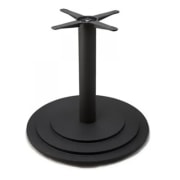
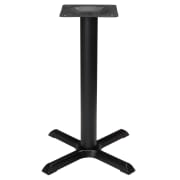
- If you are looking for a low key table base, we recommend the traditional cast iron bases, standard round or square-shaped, or the x-prong table bases.
- If you want to include the table base as part of your decor, we recommend our line of elegant designer style table bases for a decorative approach.
- Cast iron tables may not be your go-to material, but they are popular because of their rigid versatility and the rustic style, which is proving popular in modern hospitality.
- Chrome tables are a popular material choice for table bases as they are cost-effective without losing out quality. The best feature of chrome is that as a material, it is simple to match the room design.
- Avoid underestimating the size of a table top and combining it with a smaller base, which might lead to stability problems. Don’t stress, though, we have a table bases and tops guide which can help you determine what base size fits your top.